Pueblo Nuevo de Las Monas
Inside the park: a rainforest rescue center
Neofauna sits in tropical rainforest at about 200 metres of elevation, four kilometres inland from Jacó. Terrariums, a butterfly farm, breeding areas and a handful of trails — all of it built around animals that needed help.
The setting
Rainforest, not a garden
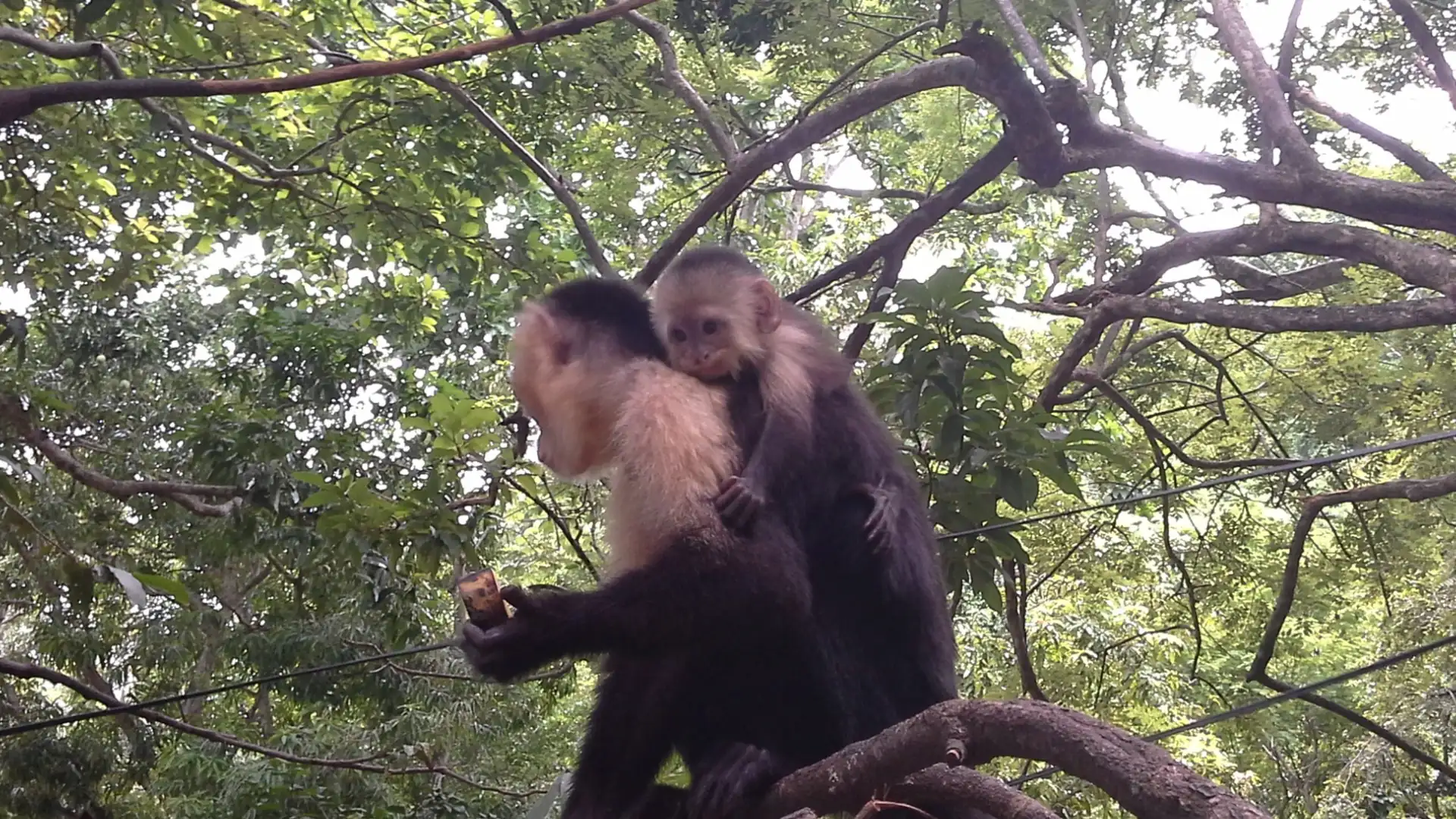
The park is inside a working patch of tropical rainforest, wet enough that the paths stay damp and loud enough at dusk that you hear the frogs before you see them. The land rises behind the buildings into the hills where the waterfalls run.
That setting is the point. The terrariums hold species that need constant humidity and shade. The butterfly farm depends on the plants growing around it. And the animals that arrive here are released into the same forest whenever they are ready.
What happens to the animals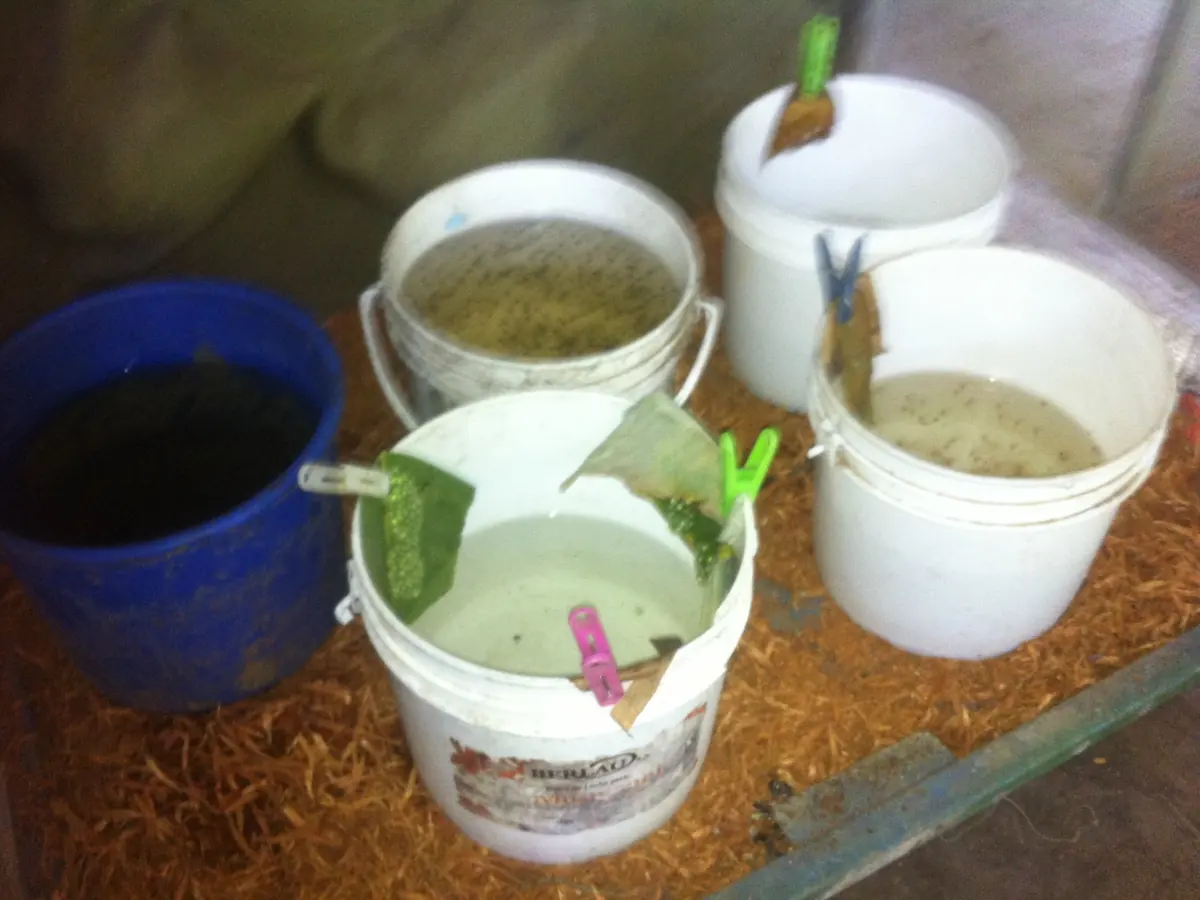
The butterfly lab, where eggs are raised in cups until they are ready to pupate.
What is here
Four things to see on site
Terrariums
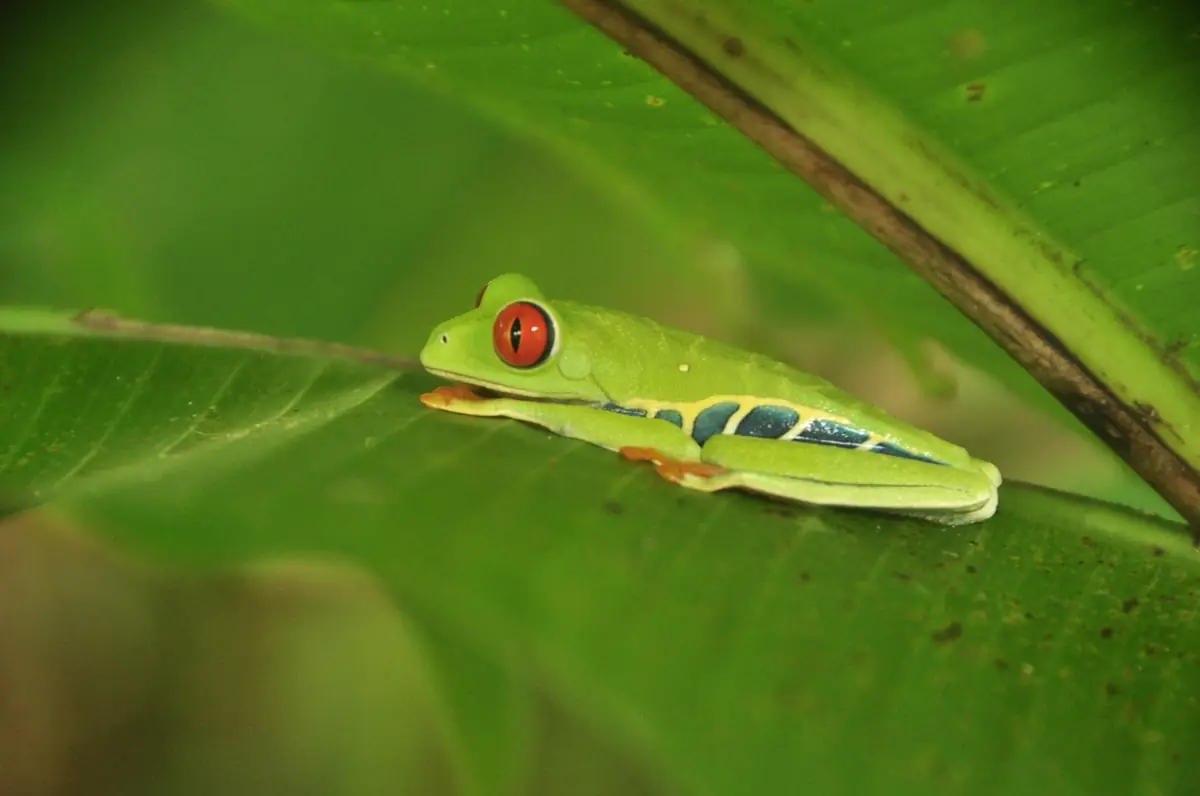
Glass tanks built for the humidity that frogs need: red-eyed tree frogs, green-and-black poison frogs, glass frogs and toads, with the leaf litter and plants they live in.
The butterfly farm
A 600 m² enclosed flight house where blue morphos and other species complete their cycle. You can follow an egg to a caterpillar, a chrysalis, and then a wing drying in the sun.
Breeding areas
Small, working spaces rather than exhibits. This is where the repopulation programs for at-risk species are run, and where rescued animals are held while they recover.
The forest edge
The trees at the back of the property are where the capuchin troop passes through, where the macaws call from, and where the night walk begins after dark.
Species
What lives in and around the park
The list changes with the season, the weather and whatever has been rescued that month. These are the animals recorded at Neofauna.
- Red-eyed tree frog
- Green-and-black poison frog
- Glass frog
- Various toads and tree frogs
- Blue morpho and other butterflies
- White-faced capuchin
- Brown-throated sloth
- White-nosed coati
- Scarlet macaw
- Green macaw
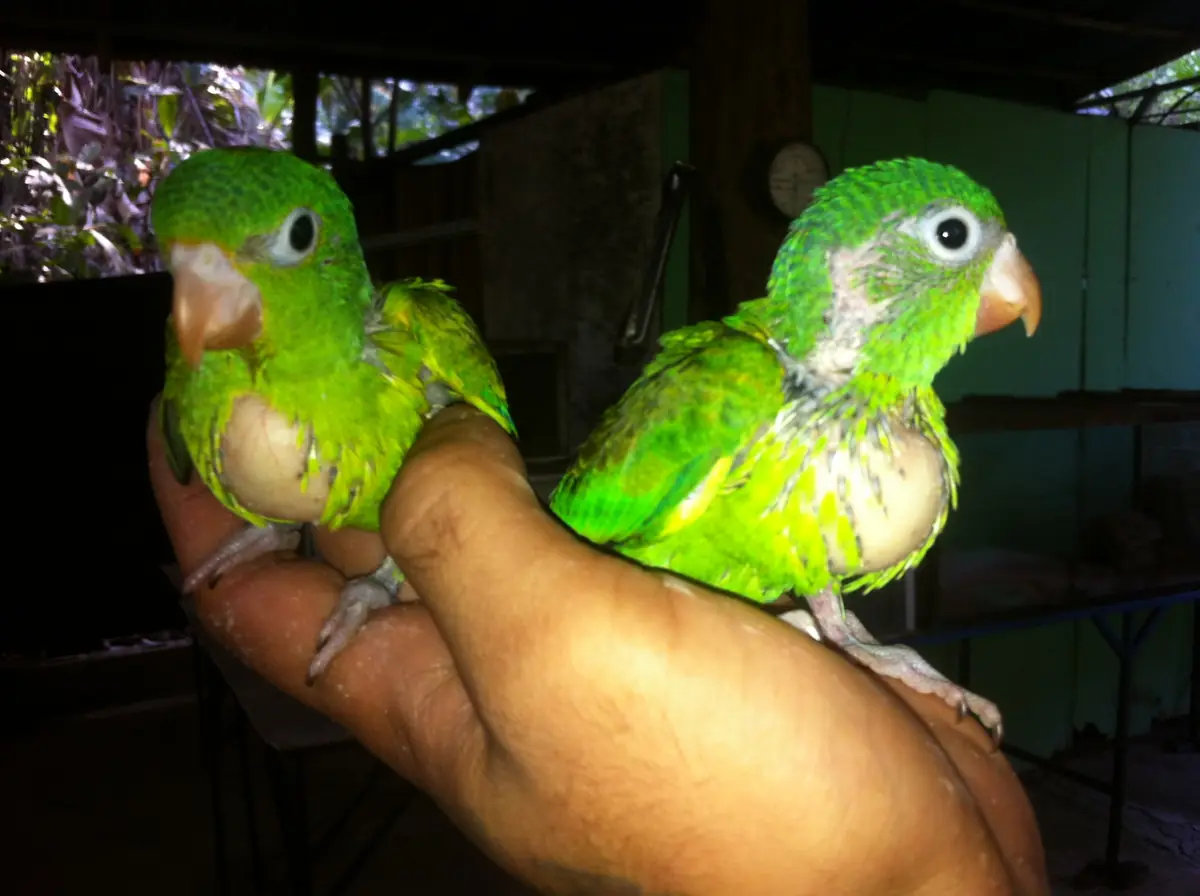
- Parrots and parakeets
- Keel-billed toucan
- Hawks and eagles
- Green iguana
- Snakes and caimans
- American crocodile (river tour)
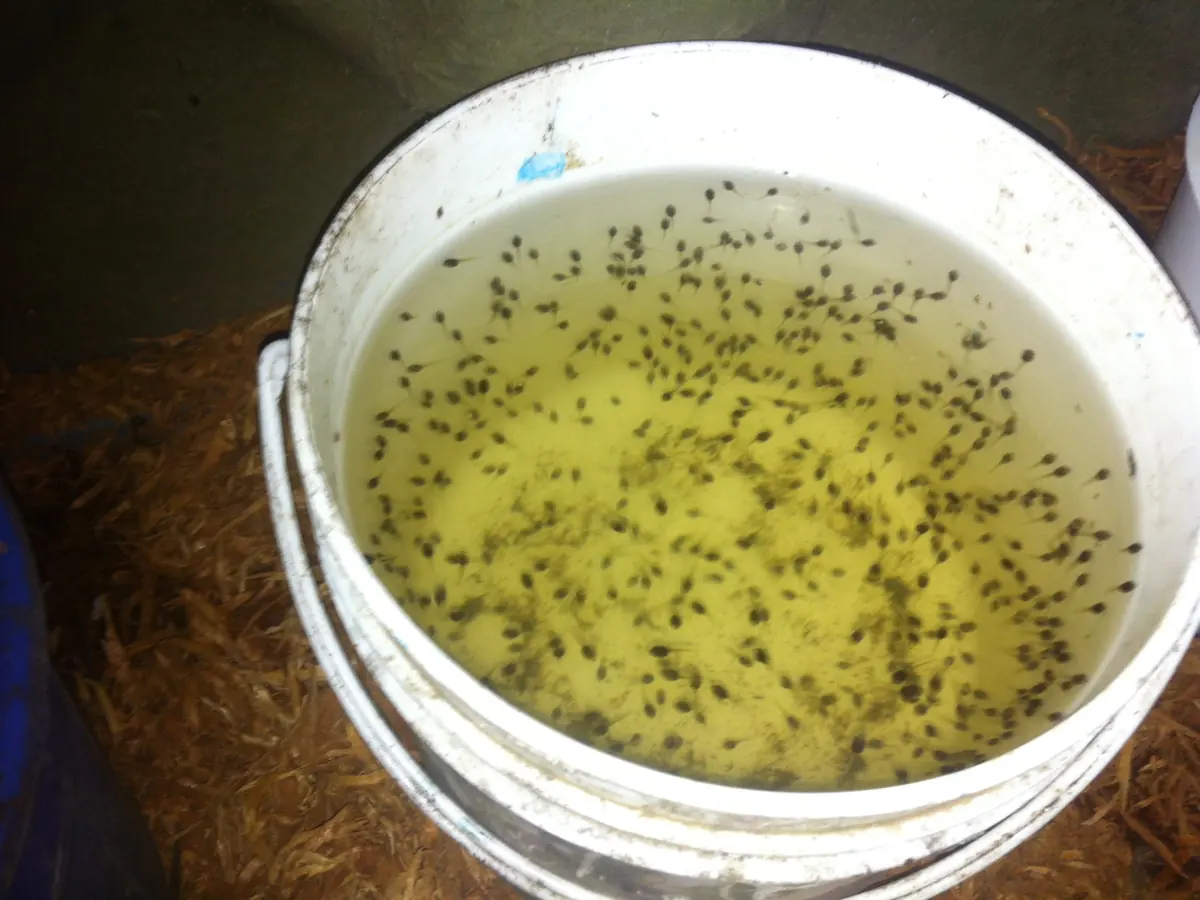
Frog eggs from the breeding program, raised on site until the tadpoles are strong enough to release.
Look around
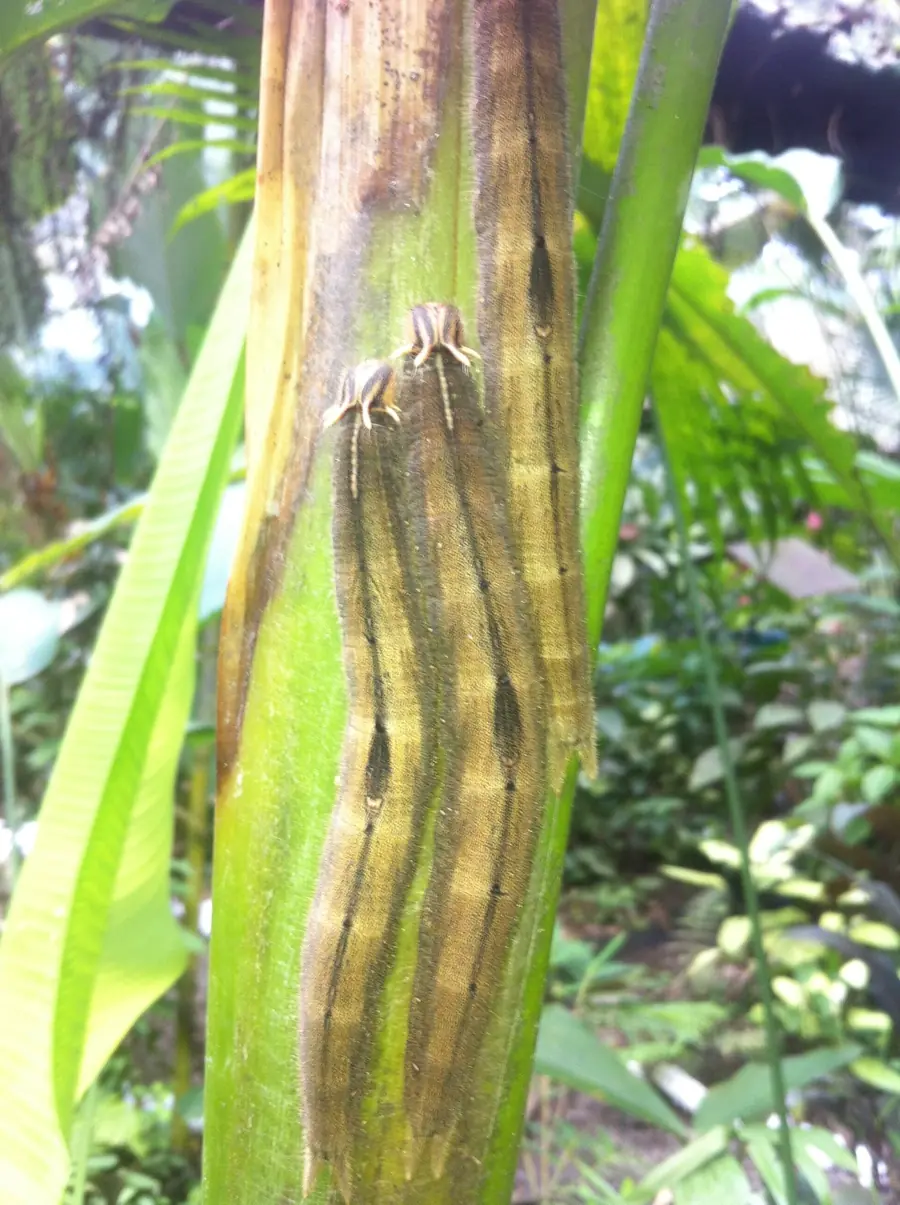
A few photographs from the park
Questions
Visiting the park
Do I have to join a tour to visit the park?
Yes. Neofauna is a working rescue center, so visitors move with a guide rather than wandering alone. Every ticket is a guided tour, and the guide decides which areas are open on the day depending on the animals in care.
What animals will I actually see?
On most visits you will see red-eyed tree frogs, poison-dart frogs, glass frogs, blue morphos and other butterflies, white-faced capuchins, scarlet macaws, green iguanas and caimans. Sloths, coatis, toucans and crocodiles depend on the tour: the Sloth Safari and the Crocodile River Boat Tour are the ones built around them.
How big is the park?
The property sits inside tropical rainforest at around 200 metres of elevation and includes terrariums, a 600 m² butterfly farm and breeding areas. It is a compact park — most visitors spend one to two hours on site, longer if they combine two tours.
Is the park accessible for wheelchairs or strollers?
The main paths around the terrariums and the butterfly farm are the easiest to move around. The waterfall routes climb natural forest trails and are not suitable for wheels. Tell us about your group when you book and we will suggest the tour that fits.
Come and see what a rescue center looks like.
The park is five minutes from Jacó. Choose a tour and your guide will meet you at the gate.